Why Construction Projects Fail
How to Get It Right from Day One
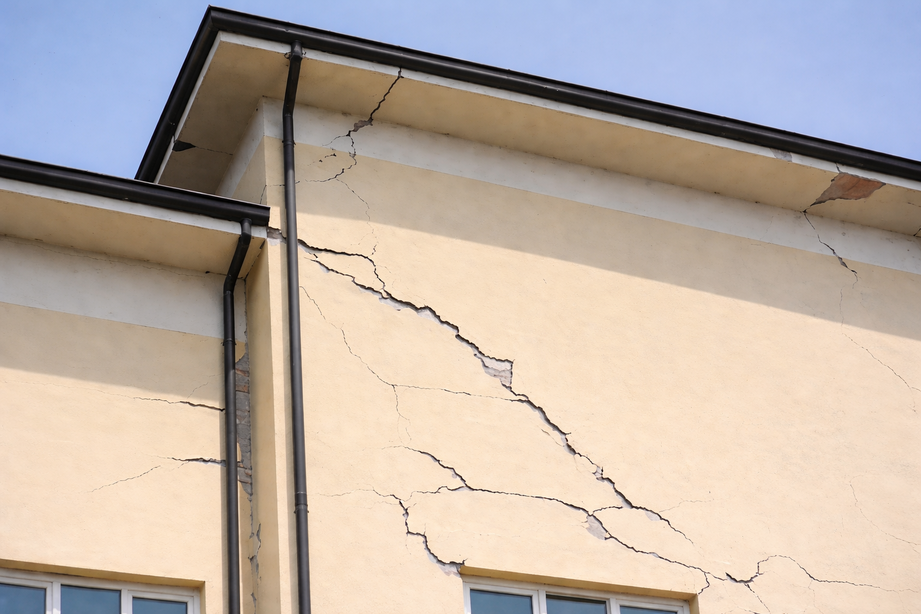
When most people think of construction failure, they picture visible issues: a cracked slab, a leaking roof, delayed timelines, or costs spiraling out of control. But these are outcomes, not causes. In reality, most project failures begin much earlier, in decisions that seem minor at the time but compound as the project progresses.
At Maing’eng’a Infrastructure Cadre, we have seen that successful projects are not defined at the point of construction, but at the point of decision-making.
1. Lack of Unified Responsibility
Construction projects typically involve multiple parties: architects, contractors, consultants, and clients, each focused on their own scope:
Designers protect intent.
Contractors manage cost and delivery.
Consultants ensure compliance.
Clients safeguard capital.
These are all valid priorities. However, without clear coordination and technical oversight, gaps emerge between them. Most construction challenges are not isolated errors; they are coordination failures. Aligning all parties under a unified delivery approach significantly reduces this risk.
2. Confusing Approval with Quality
Regulatory approvals are essential, but they only confirm that minimum requirements have been met. They do not guarantee that a project is optimized for performance, efficiency, or longevity.
A well-delivered project goes beyond compliance to ensure:
Efficient structural systems
Practical construction methodologies
Durable material specifications
Long-term value
Minimum compliance is a baseline, not a benchmark of excellence.
3. Bringing in Expertise Too Late
The impact of engineering and technical expertise is greatest at the earliest stages of a project.
As construction progresses:
Flexibility reduces
Changes become costly
Adjustments become reactive
Projects that engage technical oversight early are able to prevent risks before they materialize, rather than managing them after the fact.
4. Short-Term Savings, Long-Term Costs
Cost control is important, but not all savings create value. Decisions such as reducing specifications, omitting soil investigations, or selecting lower-grade materials may appear efficient in the short term. However, they often introduce risks that affect durability, maintenance, and performance. The most successful projects focus on lifecycle value; balancing upfront cost with long-term reliability.
5. Small Compromises Add Up
Major construction failures are rare. What’s common are small, incremental deviations:
A tolerance slightly exceeded.
A detail interpreted loosely.
A shortcut taken under time pressure.
Individually, these may seem insignificant. Collectively, they can compromise the integrity of a structure over time. Quality construction is achieved through consistency; getting the small decisions right, every time.
Construction Is Ultimately About Managing Risk
Construction is not just the act of building, it is the structured management of uncertainty.
Design reduces unknowns.
Engineering evaluates risk.
Coordination aligns decisions.
Execution delivers the outcome.
The completed structure is simply the physical result of hundreds of earlier choices.
Our Approach
At Maing’eng’a Infrastructure Cadre, we approach every project as an integrated system, not a sequence of disconnected tasks. By aligning design coordination, engineering oversight, and construction execution under a single, disciplined framework, we eliminate fragmentation and reduce risk at its source.
This ensures that decisions are not only compliant, but deliberate, optimized, and aligned with the long-term performance of the asset.
The Question That Matters
When a project underperforms, the question is rarely:
“Who built this?”
More often, it is:
“When was this decision accepted?”
Understanding this distinction changes how projects are conceived, structured, and delivered. It is the difference between simply constructing a building, and delivering an asset that endures.
At MIC, we approach every project as an integrated system, not a sequence of disconnected tasks.